Upcycle weaving thrums and scrap yarns
Don’t throw away those yarn scraps, small remnants and thrums from past projects can become the starting point for something new. Lea Williams of Lea Wild Creative shares a creative way to upcycle weaving thrums and leftover yarn by blending them into new batts, ready to spin into completely new yarn full of colour and character. I hope you give this a try!
Happy carding and spinning,
Kate

NAME: Lea Williams
BUSINESS NAME: Lea Wild Creative
The warp waste from the looms can mount up to rather a lot of weight over time, which can be recycled into fiber and handspun back into new yarns. The thrums carded back into fiber make a lovely tweed effect in spun yarn.
For the scraps to hold into a yarn when being spun, and not shed from the finished project, it will need a key, by carding the scraps to either open them up for texture, or to card them more, to turn them back into fiber.
Here is how I’ve always prepared my warp waste, and yarn ends leftover from knitting and crochet.
You will need
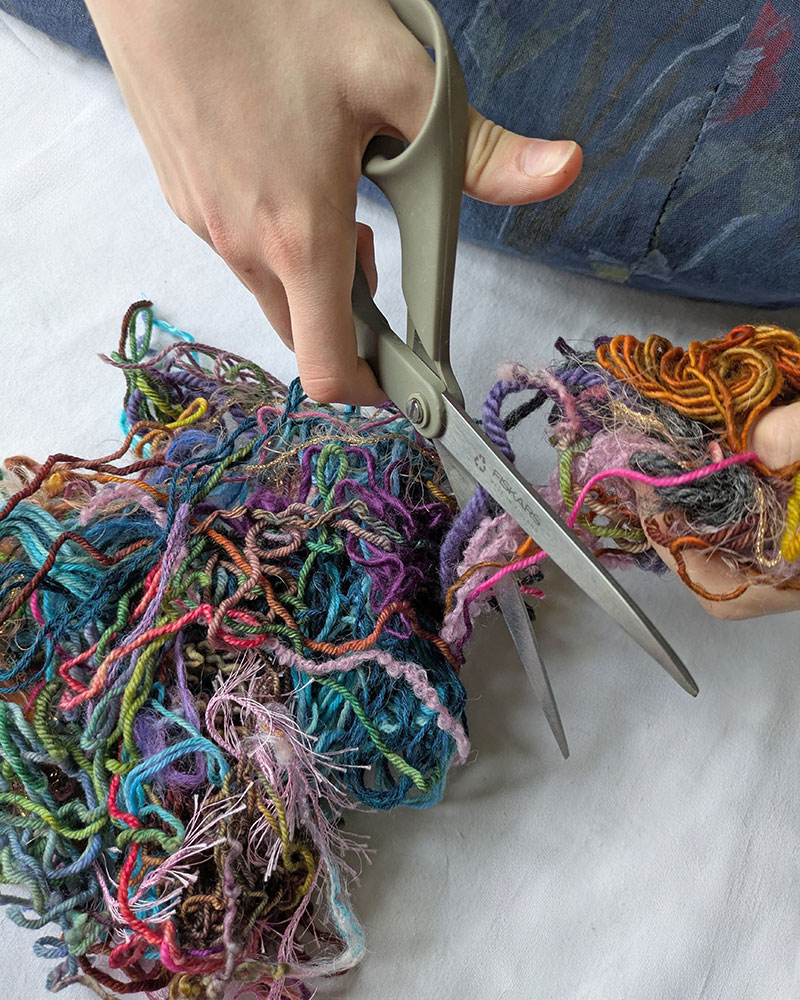
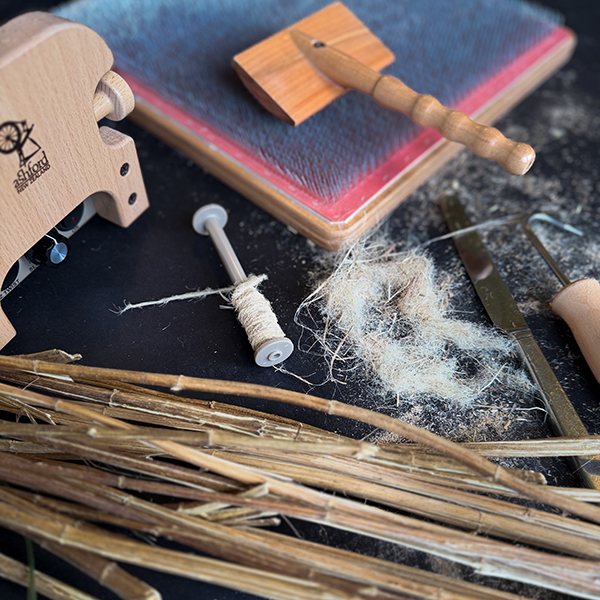
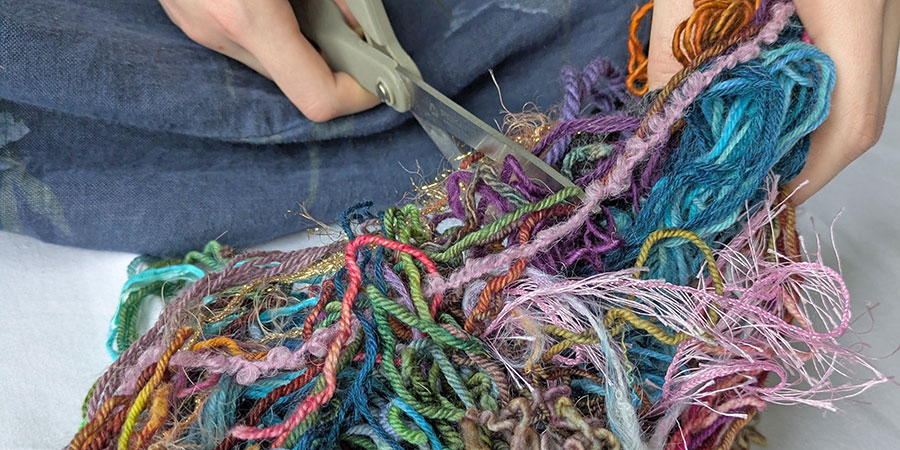
A large pair of scissors and a pair of Ashford hand carders. It’s a good idea to wear a mask and/or card outside if possible, because there will be lots of small fibers in the air when carding.
The majority of my scraps here are wool, with just a small percentage of plant fiber and acrylics from the recycled yarns I add into my weavings. Wool easily cards back into fiber, but acrylics and plant fibers can have a different effect after carding.
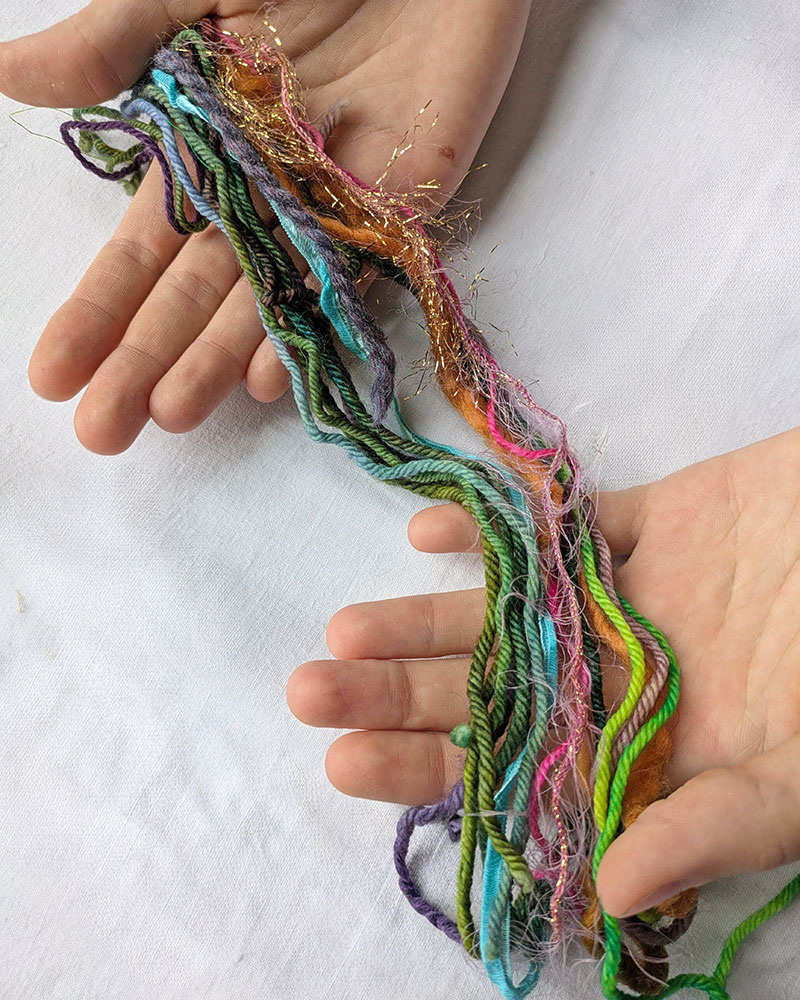
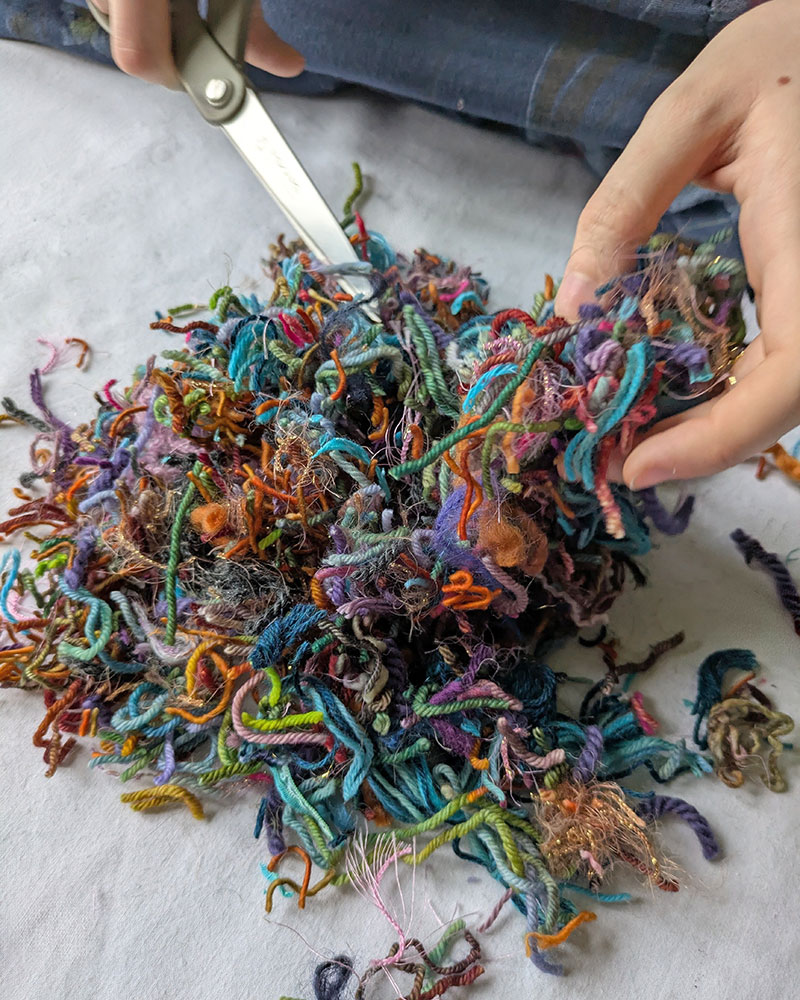
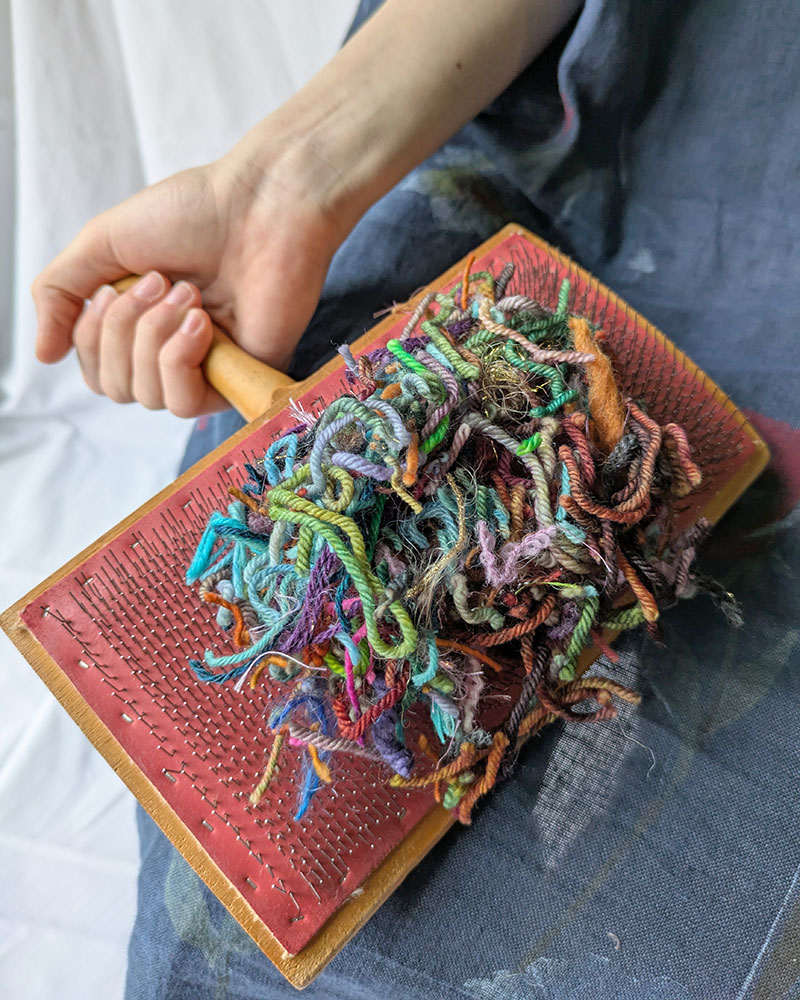
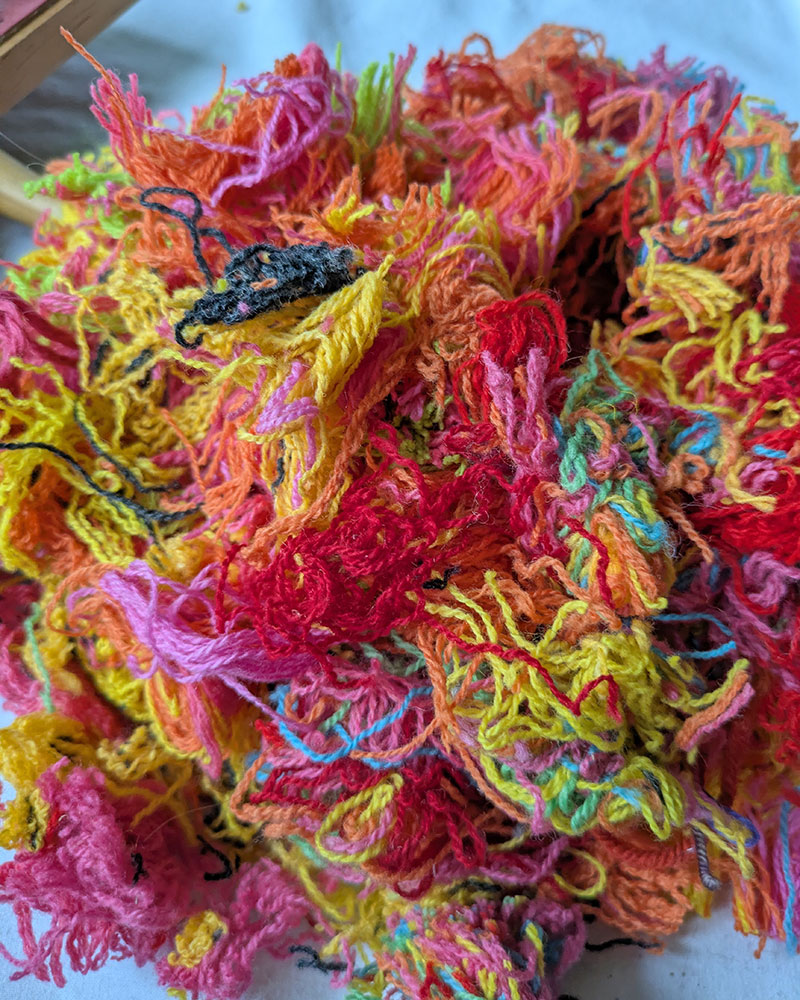
If your thrums are kept tidy in a bunch after taking them off the loom it’s easier to cut them up to around the same length of scraps, but if they are all mixed up and different lengths it’s a case of roughly chopping them approximately between 1.5 and 2.5 inches, (this is so that the teeth on the carders don’t get pulled and bent while carding yarns). My waste yarn ends are mostly mixed up all together in a large ziplock bag, so I take a handful and roughly chop them, and pull out any longer ones I’ve missed.
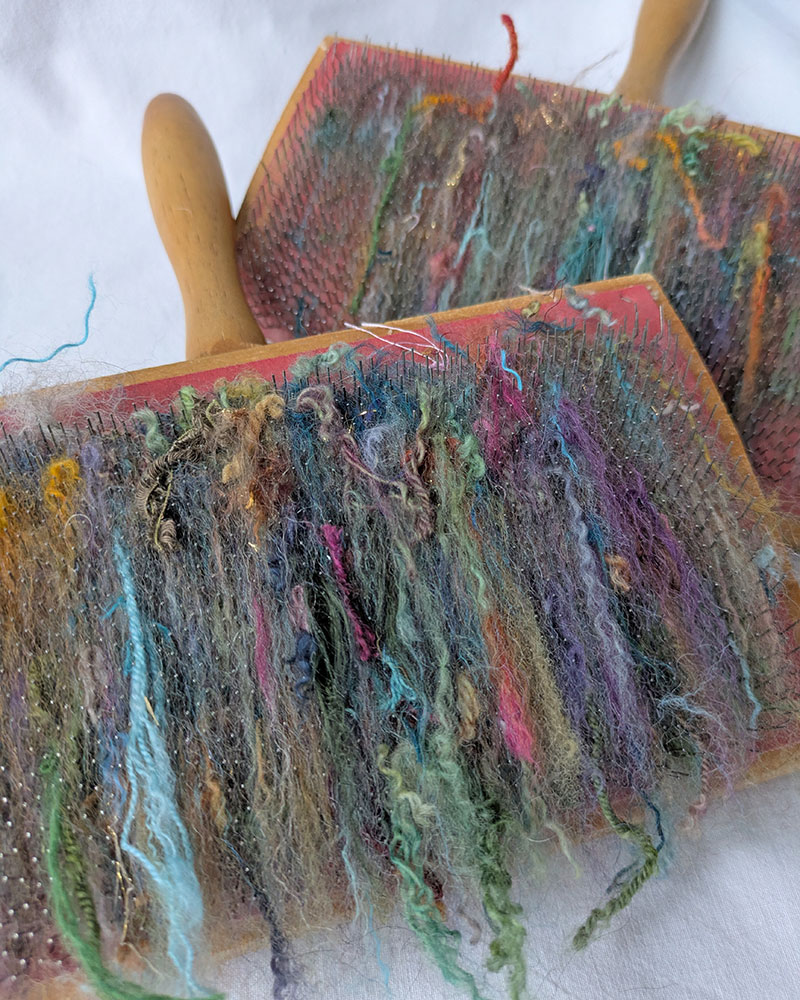
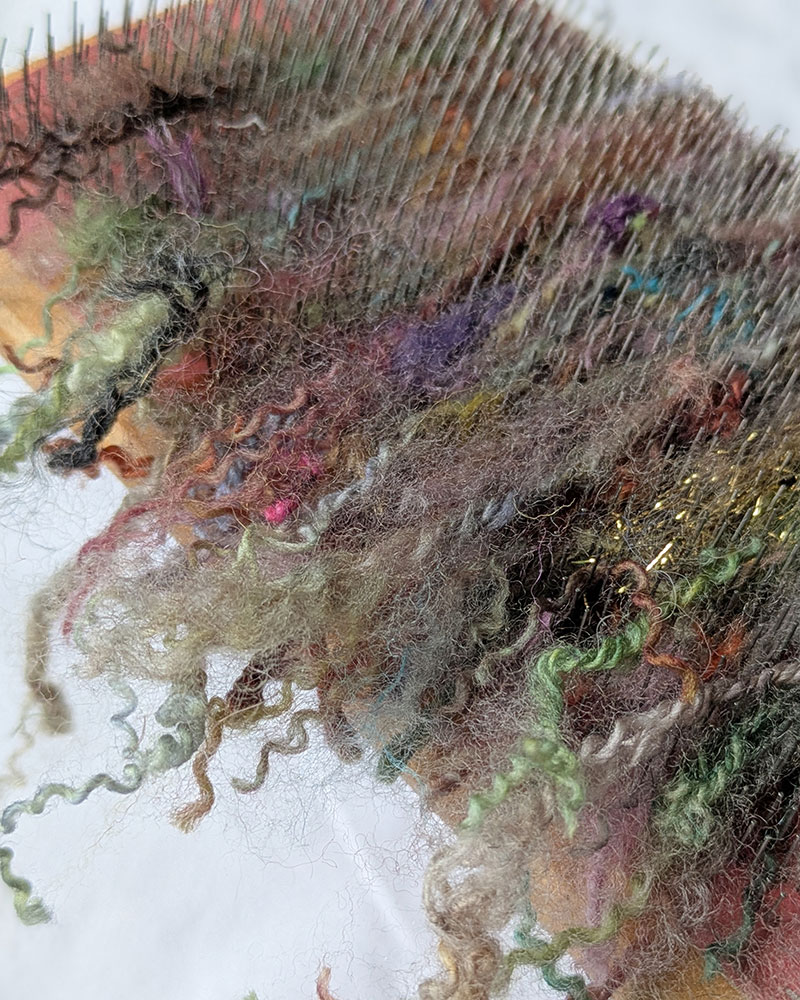
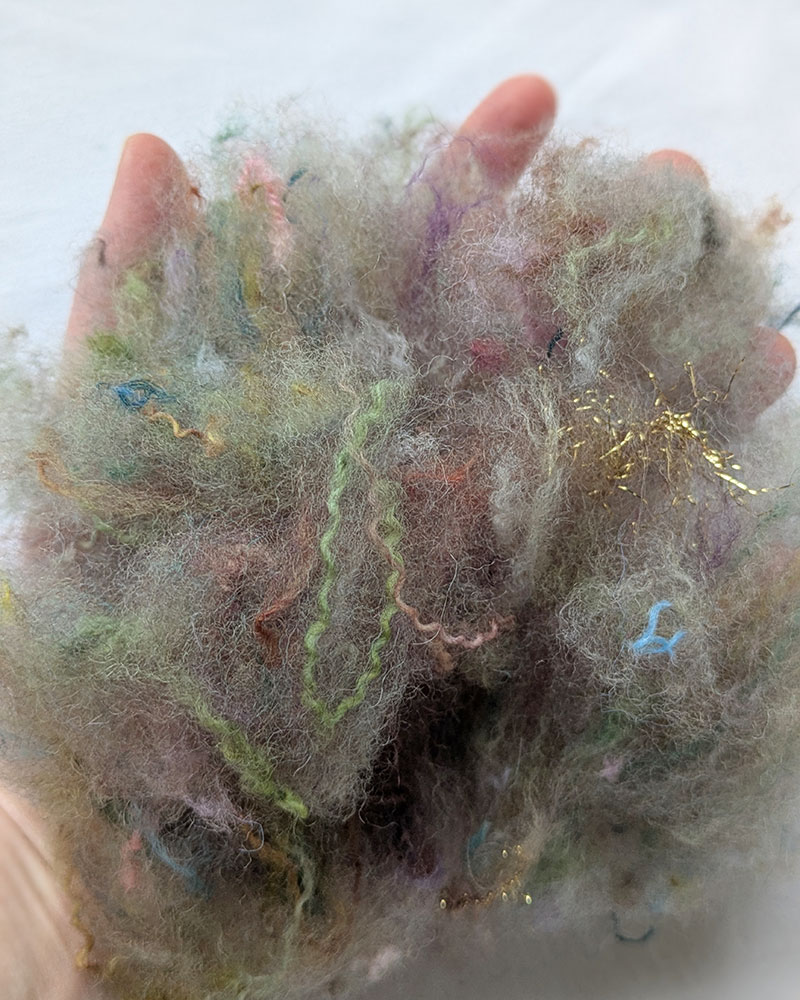
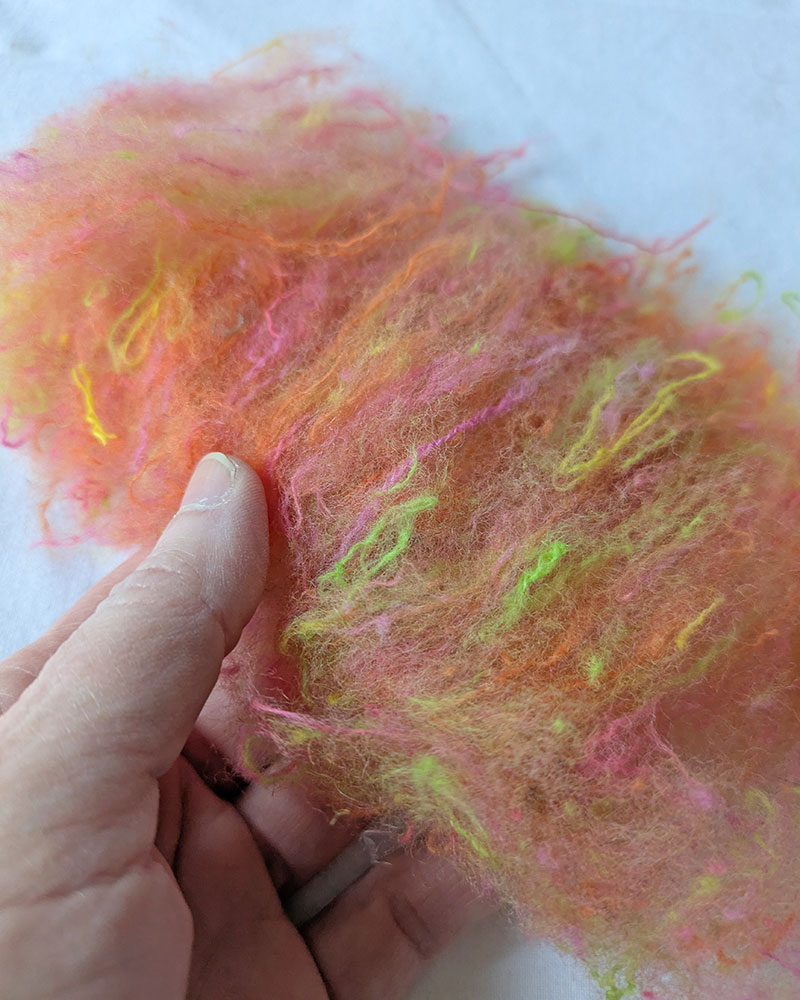
I card a small handful at a time using short strokes, and turn it from batt to batt several times to make sure all of the cut yarn has been opened up. Once the scraps are open it’s up to you how much you card it, either enough to give it a good key to be blended into batts with more texture, or to keep carding until it is turned back into fiber, which can be used as a tweed effect in batts, or even spun as a short staple recycled fiber. If I’m spinning the recycled fiber on it’s own then I spin it with plenty of twist and ply it, but usually I use it as a tweed effect fiber to add in to my batts and rolags.
Blended together with white fiber, the colours will be lifted and show up more. Blended together with greys and browns and darker colours, the colours will be dulled.
In the photos, the pink and orange scraps are from the thrums of very fine lambswool warp from my friend’s floor loom. Being fine yarn they would be easier to card on finer toothed carders, but I just worked them on my 72 point carders for longer, and they’ve opened up nicely. I also added a little angelina to the scraps to give a little sparkle.
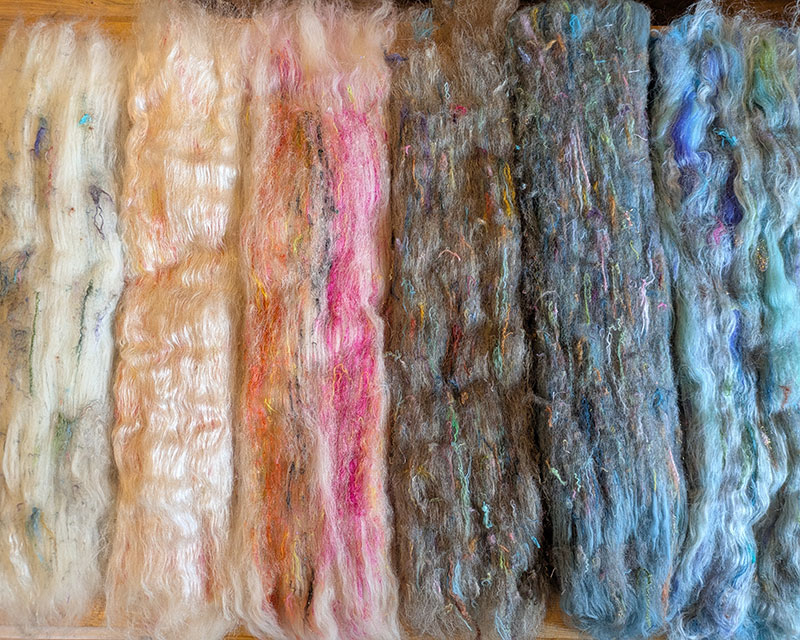
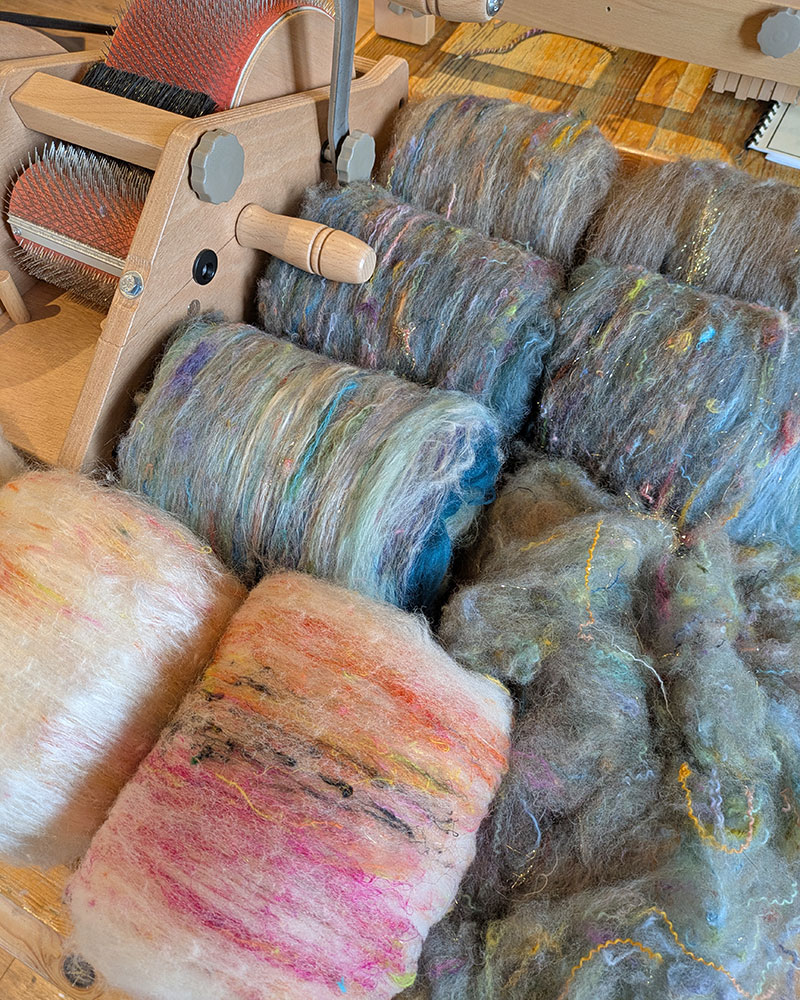
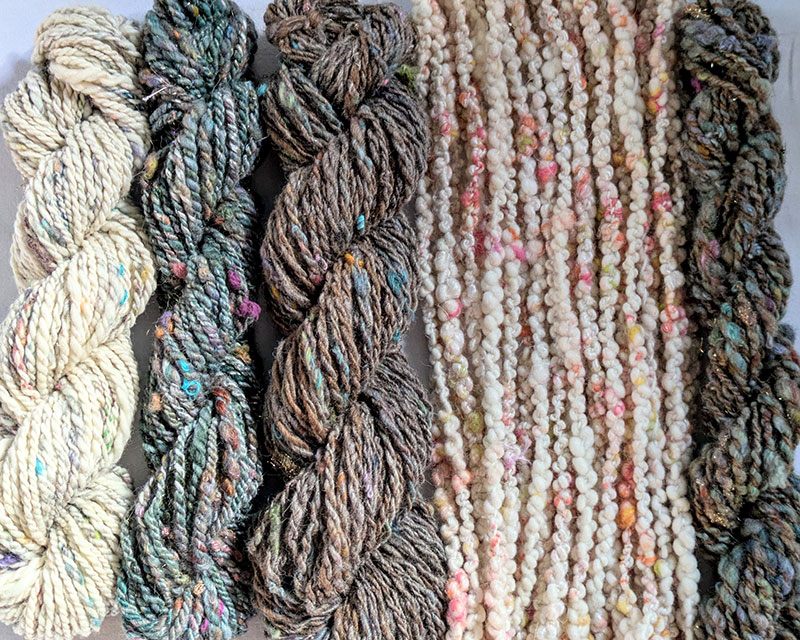
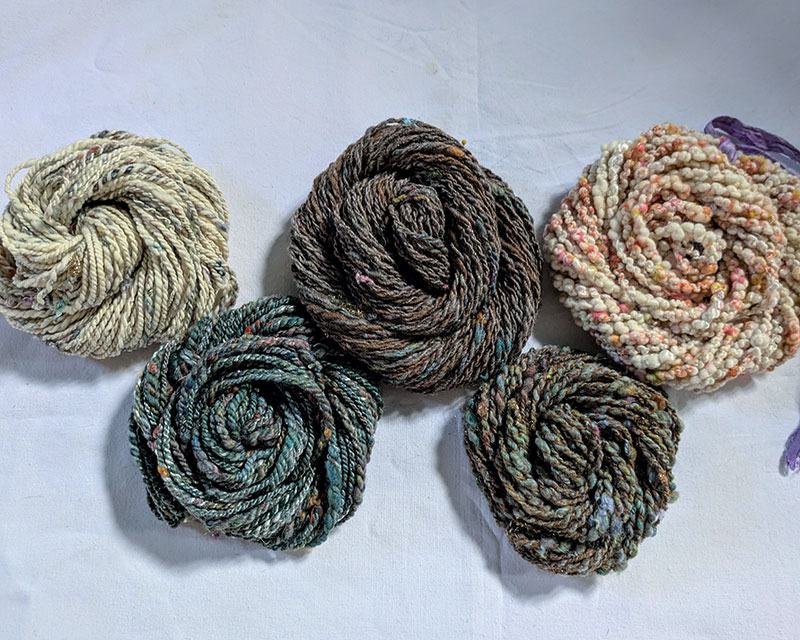
Here are a few different batt combinations I’ve blended to show some examples. I play with blending different ratios of the scrap fiber into batts and rolags.
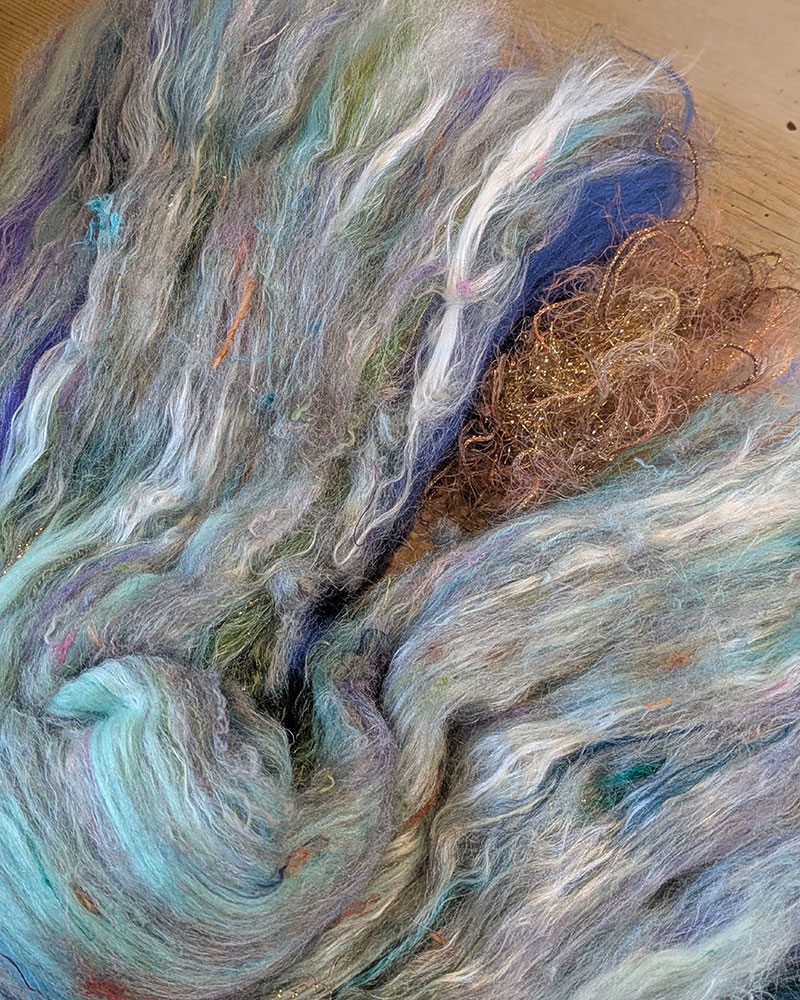
The carded scraps can be used in different ways in batts and rolags. On the Ashford Wild Carder I’ve used the scraps as a tweed effect in between layers of wool, using the white to lift and show up the recycled colours in the tweed. I made a batt with natural undyed coloured wools in browns and greys for a more subtle and earthy tweed. I also made a batt with some hand dyed wool in blues with multi-coloured scraps, and another white one, with the pink, orange and yellow fine loom thrums. (In the photo of the finished Batts there are also an extra couple that I blended with added sari silks as well as the carded waste.) When adding the carded scraps to the drum carder I add them in fine layers between the wools, to build up a batt of evenly spread layers of fibers, so that they are easy to handle when spinning.